



































Sourcing Phones from Guangdong's Electronics Clusters: A Buyer's Comparison and Acceptance Guide
A practical comparison of Shenzhen, Dongguan and Guzhen cluster roles for phone sourcing, with acceptance criteria, a hypothetical scenario and a pre-order checklist.
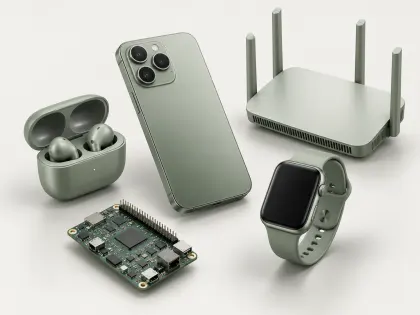
Phones are rarely made in one place. The finished handset is the end of a chain: board assembly, display and touch modules, batteries, chargers, cables and enclosures. When buyers look at Guangdong, they are usually choosing which part of that chain to anchor in, and how to write acceptance conditions that match the actual product.
Three cluster roles, not three interchangeable options
Shenzhen is described in the catalogue as a sourcing focus for smart devices, PCBA, security cameras, wearables and Huaqiangbei small-batch availability. For phones, that makes it the natural place to discuss complete units, board-level design and small-batch or mixed-model purchasing. A Shenzhen-facing supplier may be a trading company, a design house or a factory; the directory entry alone does not tell you which.
Dongguan is characterised by SMT assembly, plastic housings, connectors, cables and contract assembly. This is the cluster to consider when the phone program depends on tooling, enclosure finish, cable assemblies or volume assembly rather than on ready-made stock. Buyers who need a custom housing or a specific connector set will often split the order: mainboard and system integration in one place, mechanical and cable work in another.
Guzhen is a lighting and luminaire ecosystem. It is not a phone cluster. Its relevance to a phone buyer is limited to accessory or lighting-adjacent items, such as LED modules used in phone accessories or retail display lighting. Treating Guzhen as a phone source would be a category error, and the regional directory listing is not evidence that a given company makes phones.
What the catalogue does not tell you
A cluster name is a regional directory entry, not a verified factory. Nothing in the supplied context states production shares, certifications, prices or current policies. Buyers should therefore treat cluster membership as a starting point for shortlisting, not as a quality claim. Verification is a separate step: confirm the legal entity, the actual production site, what is done in-house and what is subcontracted.
Decision criteria that actually separate offers
First, define the product tier. A feature phone, a smartphone and a tablet differ in radio bands, display requirements, battery capacity and software support. Write the tier into the request for quotation so suppliers quote the same thing.
Second, separate design responsibility from manufacturing responsibility. Ask who owns the board layout, who writes the firmware, who holds the tooling and who handles after-sales replacement. A supplier that only assembles will price differently from one that also designs.
Third, fix the acceptance basis before price. For phones, that normally includes sample approval, a golden sample retained by both sides, functional test coverage, cosmetic criteria, packaging and labelling checks, and a defined sampling plan for outgoing inspection. Electrical safety and radio compliance are specialist areas: the buyer should confirm which party holds the relevant test reports and should have those documents reviewed by a qualified compliance specialist rather than assuming a supplier's statement is sufficient.
Fourth, plan the battery and charging path carefully. Battery packs and power adapters are safety-relevant. Buyers should require traceable cell and pack information, protection circuitry details and documentation that a competent reviewer can assess. Do not accept verbal assurances as a substitute for documents.
Hypothetical scenario
Suppose a buyer wants 5,000 mid-range smartphones with a custom back housing and a bundled charger. A workable split could be: system and board integration with a Shenzhen-facing partner, enclosure tooling and cable assembly with a Dongguan-facing partner, and final assembly and packing at one nominated site so that responsibility for outgoing quality is clear. The buyer would issue one specification covering radio bands, memory, display, battery, charger and packaging; require a golden sample; agree a cosmetic standard with photographs; and define an AQL-based outgoing inspection. This is a hypothetical illustration of how cluster roles can be combined, not a recommendation of any supplier or a statement about actual market structure.
Actionable pre-order checklist
- Confirm the legal entity and the physical production address, and whether the address matches the cluster you are dealing with.
- Ask what is made in-house and what is outsourced, item by item.
- Specify the product tier, radio bands, memory, display, battery and charger in one document.
- Agree a golden sample and retain signed copies on both sides.
- Define functional test coverage, cosmetic criteria and the outgoing sampling plan.
- Identify who holds electrical safety and radio test documentation, and route it to a qualified specialist.
- Require traceability for battery cells, packs and adapters.
- Agree packaging, labelling, language and accessory contents.
- Agree warranty terms, spare parts and the returns process.
- Record who owns tooling, firmware and design files.
Used this way, the cluster map becomes a shortlisting tool. The order only becomes safe when the specification, the golden sample and the acceptance documents line up.
Share the product, specifications, quantity and destination to discuss sourcing options.